


- INDOOR LIGHTS
- 360 Degree Neon Customised Lighting
- Magnetic Track Lights
- Skyline Steel Strip Lighting
- Chandelier & Pendant
- Down Lights
- Bulbs
- Surface Mounted Lights
- Led Rope Light
- Led panels
- Cabinet & Wardrobe Lights
- Led Tube and Batten Lights
- Linear Hanging & Recessed Bar Lights
- Track Lights
- Wall Lights
- Fibre Optic Ceiling Lights
- Lamps
- OUTDOOR LIGHTS
- SOLAR LIGHTS
- Disco and Party Lighs
- Led Addressable Lights & Controllers
- Fibre Optic Lights
- Stretch Fabric Ceiling Light
- Silicone Profile Light
- Led Strip Lights
- Led Aluminium Profile
- Led Adapters & Power Supplies
- Customized Lights
- Led tree Lighting and Decoration
- OTHER PRODUCTS

How to Install a Stretch Fabric Ceiling in Pakistan — Step-by-Step Process, Tools & Materials

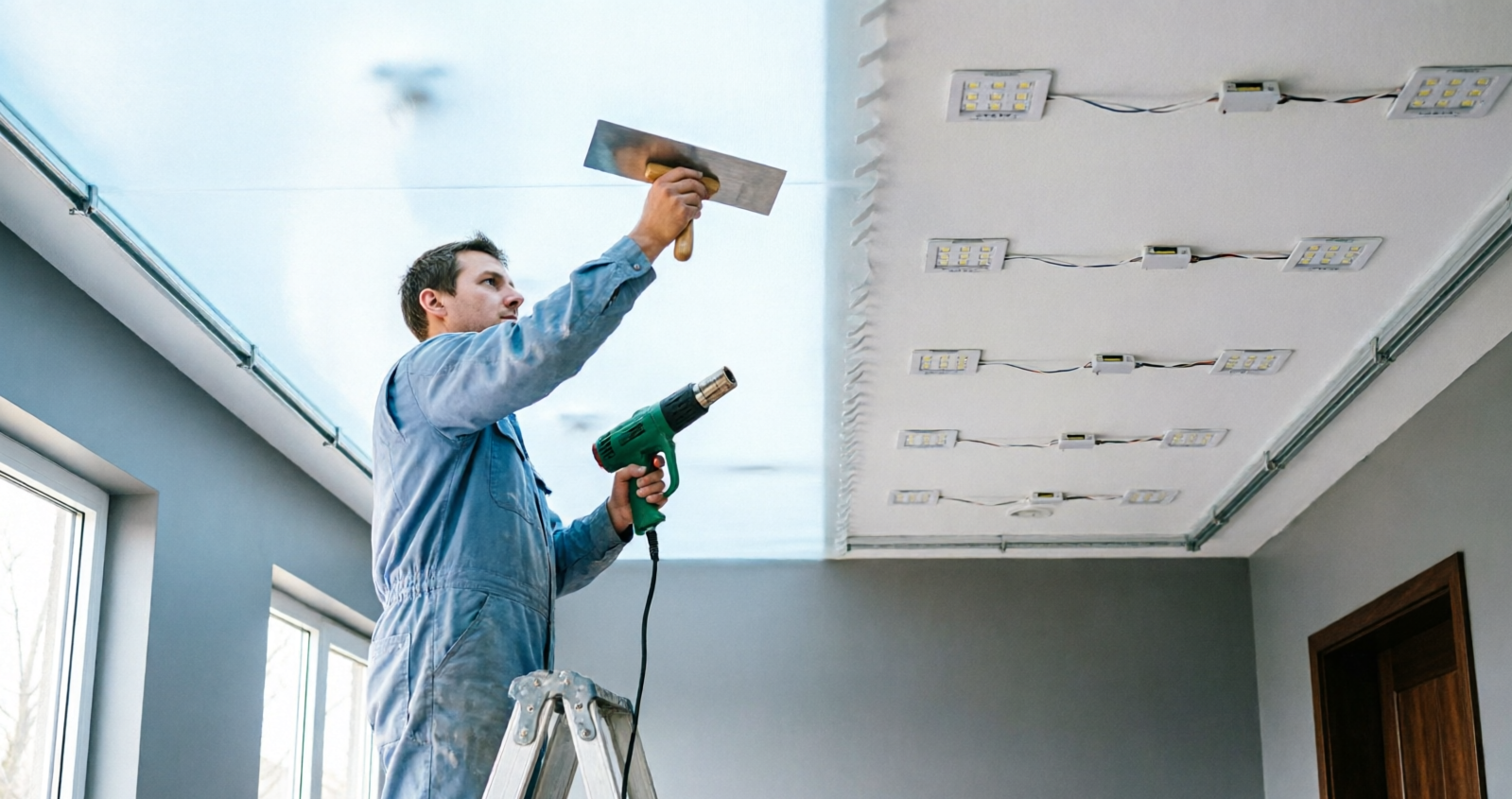
A stretch fabric ceiling is installed in four phases: levelling an aluminium harpoon track around the perimeter, mounting and testing the LED backlighting modules, heating the PVC membrane to 60–70°C and locking its harpoon edge into the track with a special spatula, then final tensioning and trimming. Newon completes most residential installations in 1–2 days.
This is the exact process, tool list, and material list Newon’s installation teams use on every project — from the Beverly Centre gym in Islamabad to residential sky ceilings across Rawalpindi and Lahore.
Installation at a Glance
| Parameter | Standard |
|---|---|
| Total time (residential room) | 1–2 days |
| Fabric heating temperature (PVC) | 60–70°C |
| Track fixing interval | ~10cm, laser-levelled |
| Minimum cavity depth | 60mm (200mm optimal) |
| Cavity finish | Matt white (RAL 9010) |
| Team | 2 trained installers + qualified electrician |
The 5 Components & Tools You Need
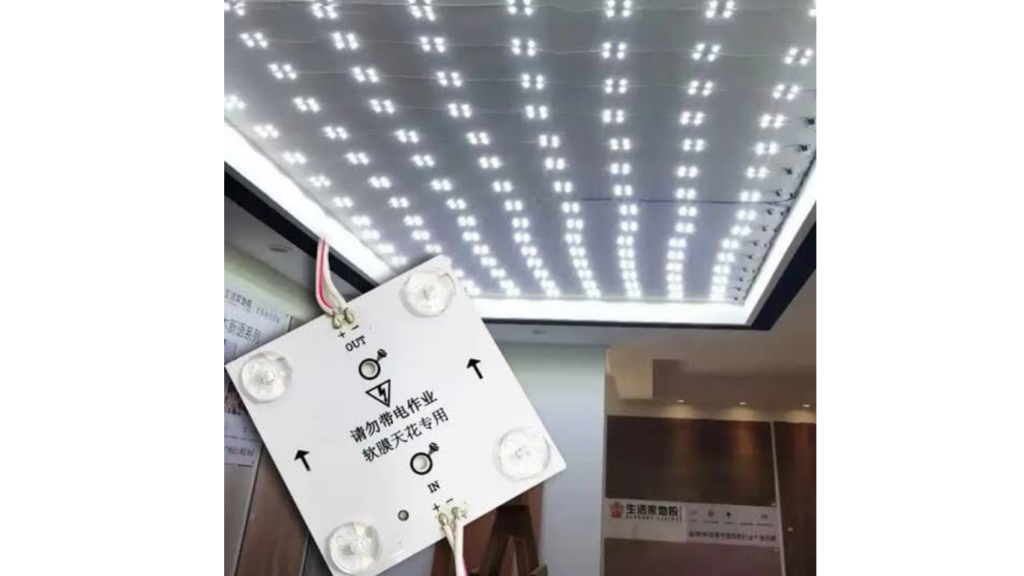
1. LED Backlighting Modules + Drivers — Flat LED panels or 4W, 24V DC backlit modules with diffusers, wired to drivers that regulate power. Drivers are mounted outside the ceiling void (or behind an access panel) for serviceability.
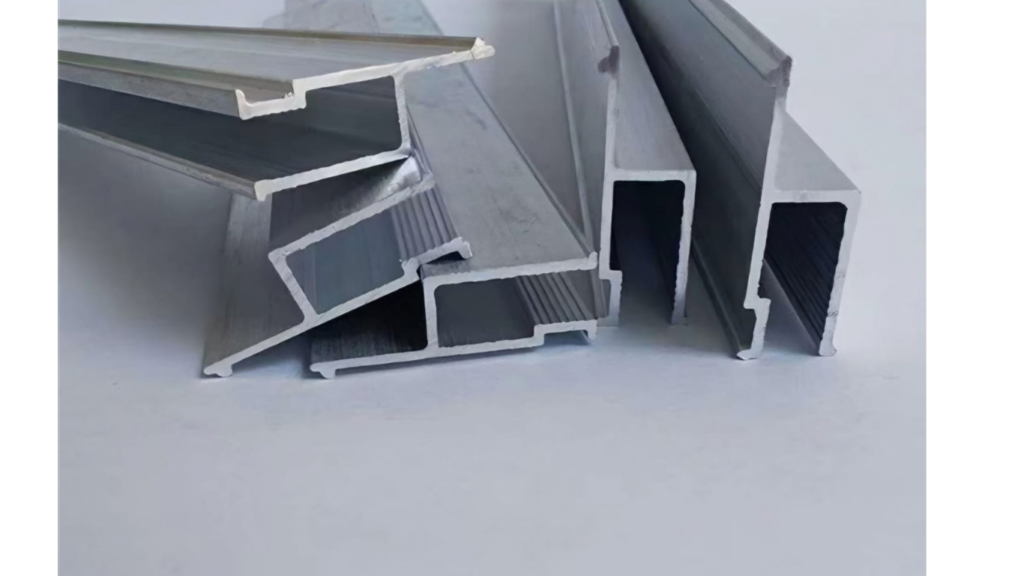
2. Aluminium Harpoon Track (Perimeter Profile) — Extruded aluminium profiles fixed around the room’s perimeter. The “H-profile” groove is what mechanically locks the fabric under tension.
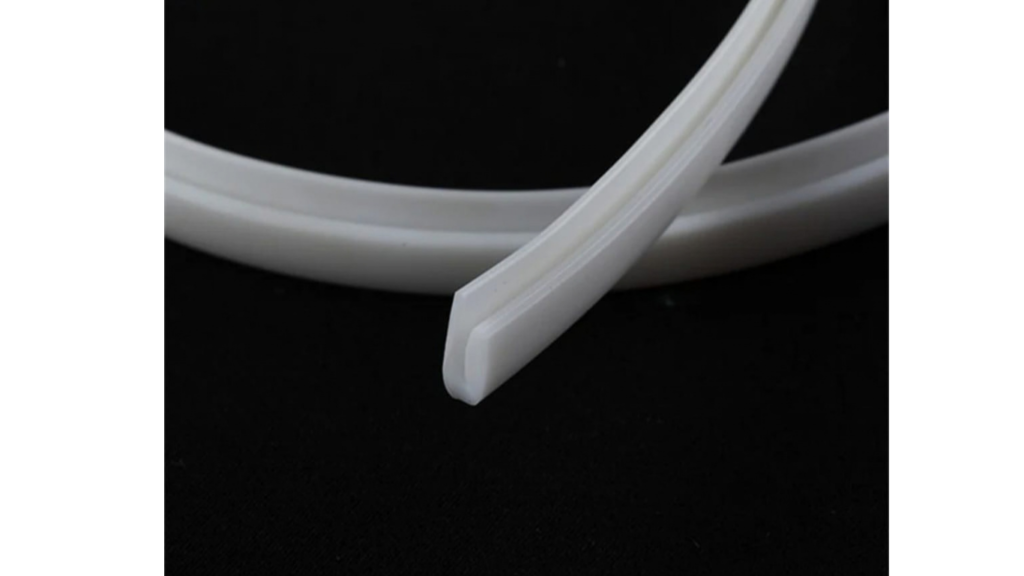
3. PVC Harpoon (Wedge) — A flexible PVC strip welded to the fabric’s edge. It slots into the track groove — a pure mechanical lock, with no glue and no screws piercing the fabric.
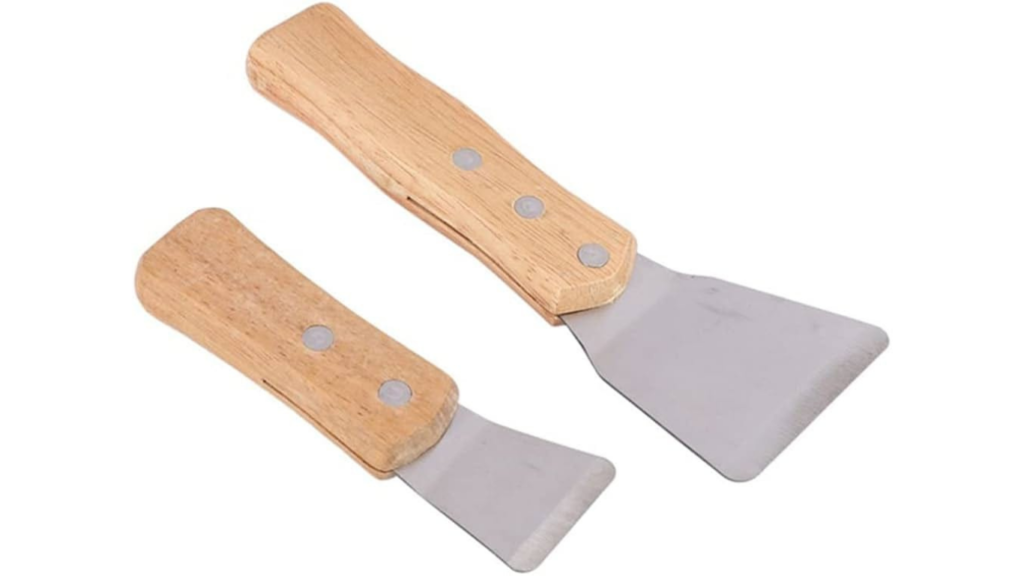
4. Installation Spatula — A wide, rounded-blade steel tool with a wooden handle, used to roll the harpoon edge into the track without damaging the membrane.
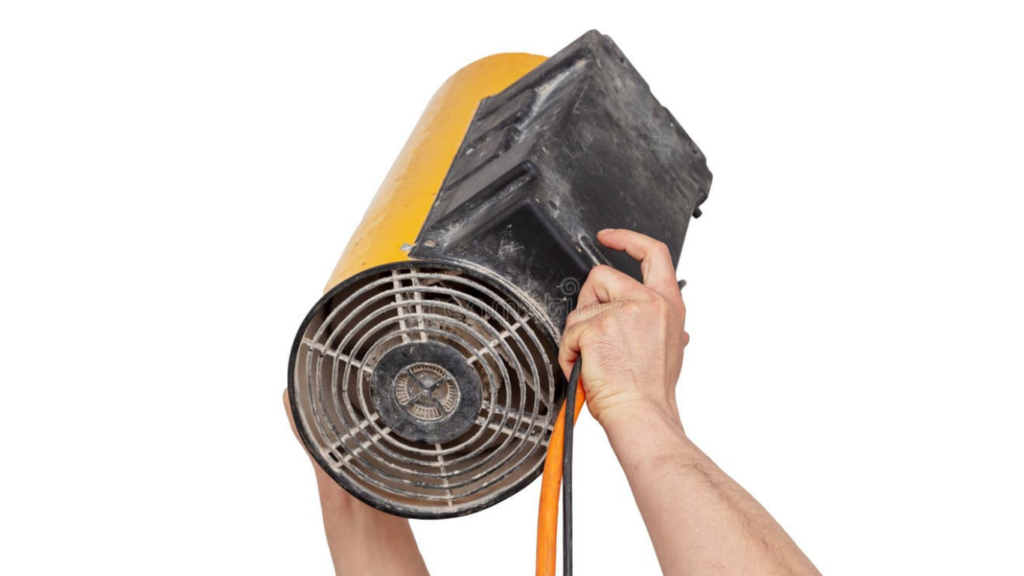
5. Industrial Heat Gun — Heats the PVC membrane to 60–70°C so it becomes elastic enough to stretch drum-tight without stress marks.
Step-by-Step: The 4 Installation Phases
Phase 1 — Preparation & Framing
- Complete all painting, plastering, and dust-generating work first; cover furniture.
- Finish MEP coordination: wiring, fixture points, and HVAC in place; drivers positioned outside the void or behind an access panel.
- Fix aluminium profiles around the perimeter, perfectly level, at ~10cm fixing intervals, corners precisely aligned.
Phase 2 — Lighting & Electrical
- Mount LED modules/panels to the structural ceiling per the pre-planned layout; secure wiring to drivers. Full light test before any fabric goes up — Newon’s non-negotiable gate.
Phase 3 — Fabric Installation & Tensioning
- Unfold and prepare the membrane.
- Corner anchoring: lock all four harpoon corners into the track first — this squares the fabric and distributes tension evenly.
- Heating: warm the room and fabric edges with the heat gun until the PVC is soft and elastic.
- Harpooning: using the spatula’s belly, roll the harpoon edge into the track — corners to mid-side on each wall.
- Final tensioning: pass the heat gun over the full surface; waves relax, and as the fabric cools it contracts drum-tight and perfectly flat.
Phase 4 — Finishing
- Trim excess fabric flush using the profile as a guide.
- Switch on lighting, inspect uniformity, clean, and hand over.
The Critical Rule: Pitch-to-Depth Ratio for Even Backlighting
Shadow-free glow depends on the distance between LED modules (pitch) versus the cavity depth behind the fabric (depth):
| Cavity Depth | Max LED Module Pitch |
|---|---|
| 50mm (shallow) | 120mm |
| 70mm | 200mm |
| 200–400mm (optimal) | Wider pitch acceptable — but requires more power to hold brightness |
Newon engineering note: Our standard 4W backlit modules are laid at 10 modules/metre (100mm pitch) — safely inside the 120mm maximum even for shallow 50mm cavities. That is why Newon ceilings show no hotspots. The cavity interior is always painted matt white (RAL 9010) to maximise reflection and uniform light mixing.
Pakistan-Specific Installation Rules
- Drivers outside the void or behind access panels — essential for fast servicing under WAPDA voltage-fluctuation conditions.
- 24V low-voltage modules in the void — safe, low-heat, and compliant with the Pakistan Electrical Safety Code when wired by a qualified electrician.
- Dust-seal all channel joints with aluminium foil tape — critical in Punjab dust seasons and KPK monsoon humidity.
- Textile membranes differ: polyester fabric uses a silicone-bead push-fit at room temperature — no heat gun. This guide covers the PVC harpoon system.
DIY or Professional Installation?
Heating, tensioning, and harpooning require trained hands — incorrect tension means permanent waves, sagging, or torn harpoons, and electrical work must be done by a qualified electrician. For a guaranteed drum-tight, hotspot-free result with warranty, use Newon’s professional stretch fabric ceiling installation service — design, supply, print, install, and maintain, nationwide.
Frequently Asked Questions
Q: How long does stretch fabric ceiling installation take? A: Most residential rooms are completed in 1–2 days. The heating, harpooning, and tensioning stage itself takes only a few hours; framing and LED layout take the rest.
Q: What tools are needed to install a stretch fabric ceiling? A: An industrial heat gun (PVC systems), installation spatula, cutting tool, laser level, drill, and fixings. Textile membranes skip the heat gun and use a seam roller for bead push-fit.
Q: Can a stretch fabric ceiling be installed over an existing ceiling? A: Yes, provided there is at least 60mm of cavity depth (200mm optimal for backlighting) and a sound substrate for the perimeter track. All wiring and HVAC must be completed first.
Q: What temperature should the heat gun be set to? A: For PVC membranes, 60–70°C (140–158°F) — enough to make the fabric elastic without scorching or leaving stress marks.
Q: How is shadow-free backlighting achieved? A: By respecting the pitch-to-depth ratio (e.g., max 120mm module pitch at 50mm cavity depth), painting the cavity matt white (RAL 9010), and light-testing all modules before the fabric is stretched.
Plan Your Ceiling With Newon
Choosing prints, colours, or pricing? Read the Stretch Fabric Ceiling Pakistan guide: types, prints & price, browse the full stretch fabric ceiling lighting range, or see a real commercial installation at Beverly Centre Islamabad.
📞 WhatsApp: +92 343 922 7883 📍 Office: Office No. 1, Plot No. 235, Street No. 6, I-9/2, Islamabad, Pakistan
By the Newon Design & Technical Team — stretch fabric lighting specialists since 2016. © 2026 Newon.pk — Pakistan’s Premier LED & Architectural Lighting Store. All rights reserved.