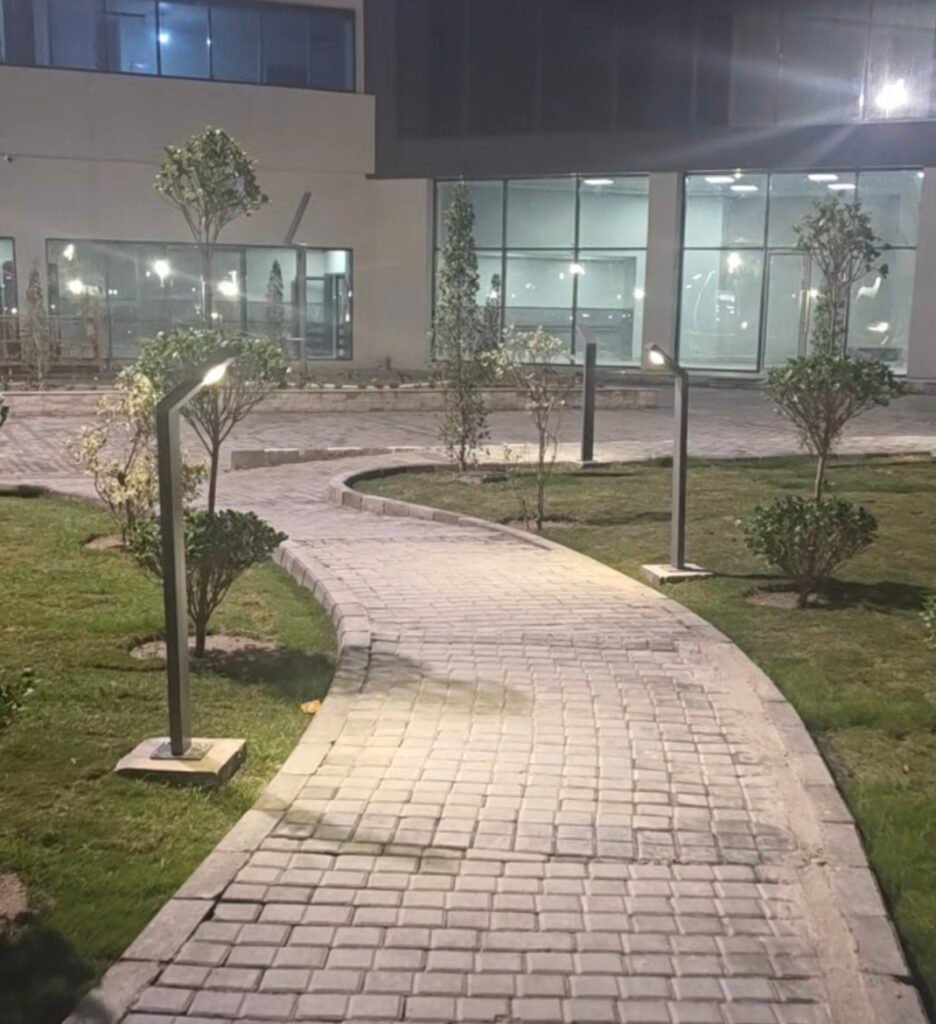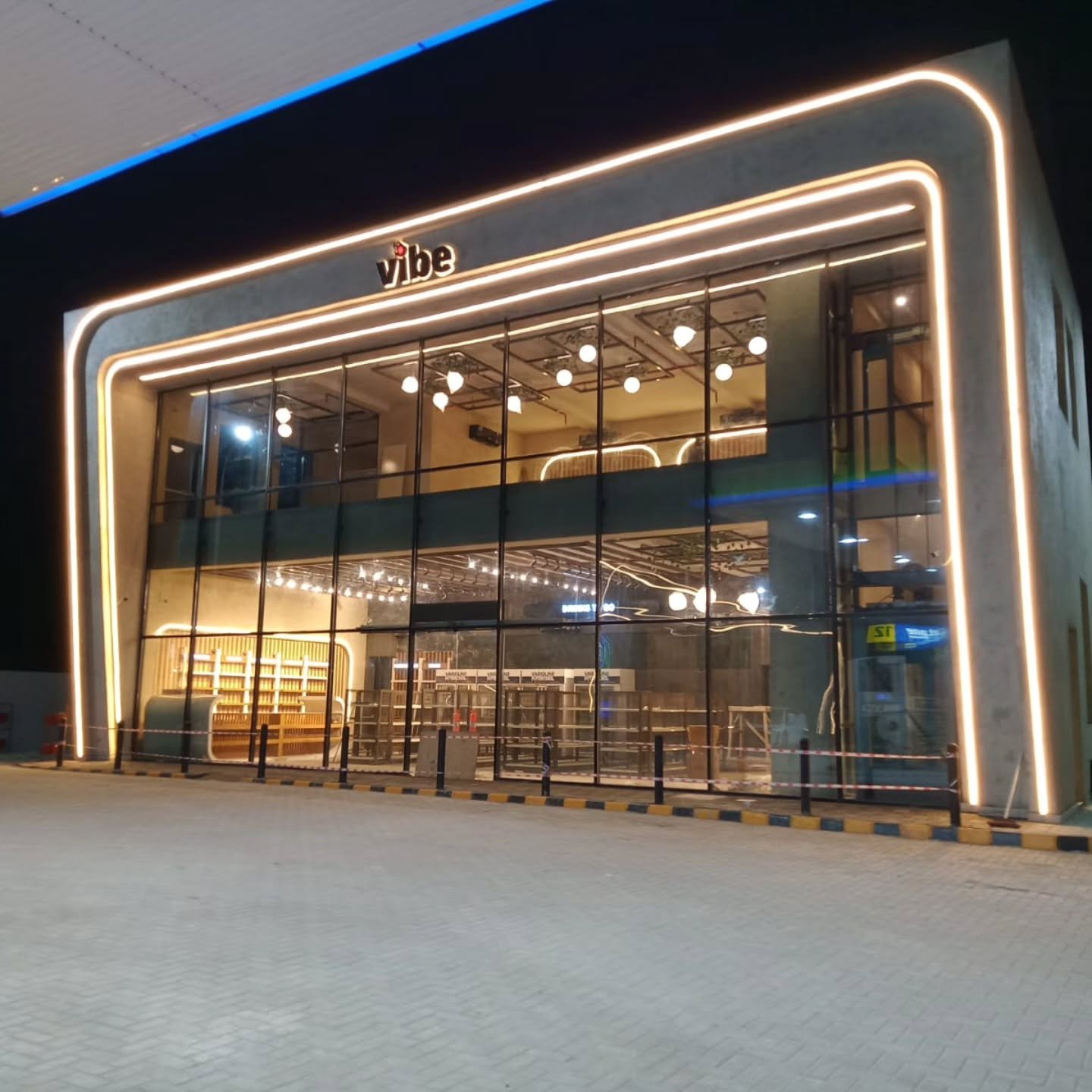


- INDOOR LIGHTS
- 360 Degree Neon Customised Lighting
- Magnetic Track Lights
- Skyline Steel Strip Lighting
- Chandelier & Pendant
- Down Lights
- Bulbs
- Surface Mounted Lights
- Led Rope Light
- Led panels
- Cabinet & Wardrobe Lights
- Led Tube and Batten Lights
- Linear Hanging & Recessed Bar Lights
- Track Lights
- Wall Lights
- Fibre Optic Ceiling Lights
- Lamps
- OUTDOOR LIGHTS
- SOLAR LIGHTS
- Disco and Party Lighs
- Led Addressable Lights & Controllers
- Fibre Optic Lights
- Stretch Fabric Ceiling Light
- Silicone Profile Light
- Led Strip Lights
- Led Aluminium Profile
- Led Adapters & Power Supplies
- Customized Lights
- Led tree Lighting and Decoration
- OTHER PRODUCTS

Architectural lighting, Building Facade lighting, Facade Lighting, Mosque Lighting, Outdoor Lighting, Project
Architectural lighting design of Usmania Mosque, Muzaffarabad — Bringing a Turkish Gift to Life After Dark

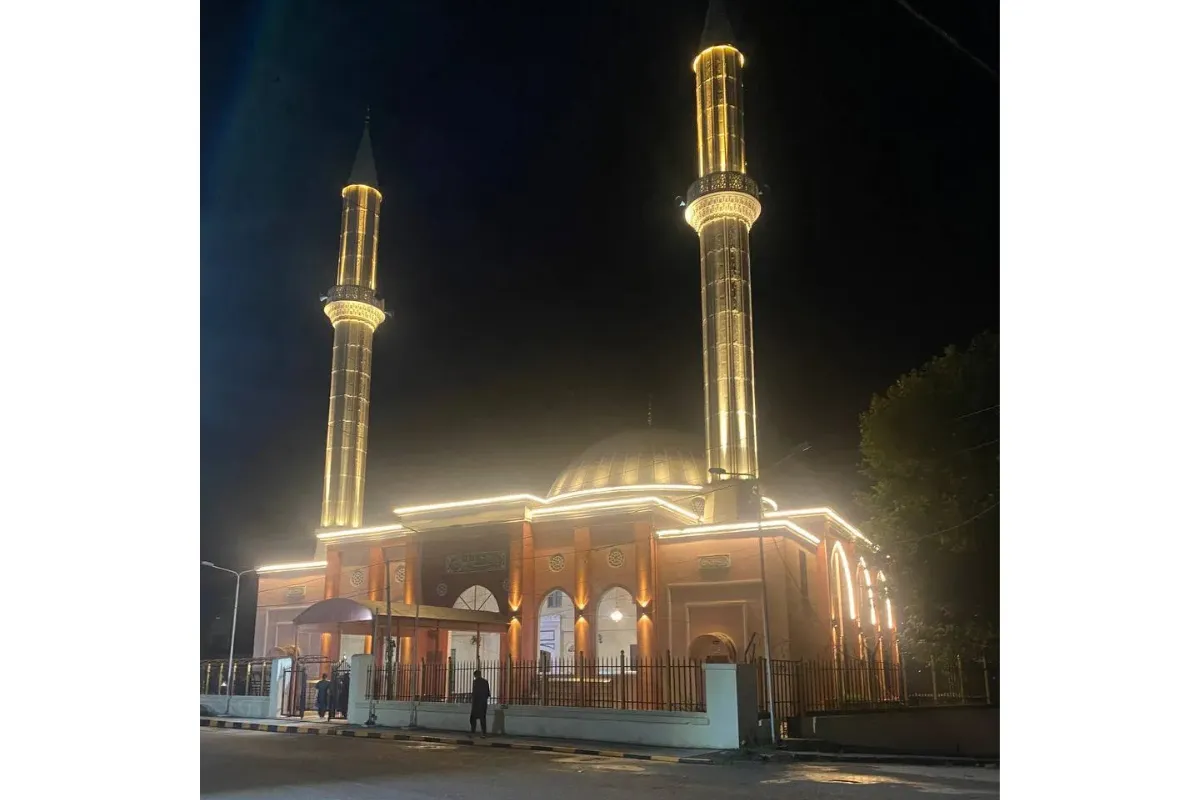
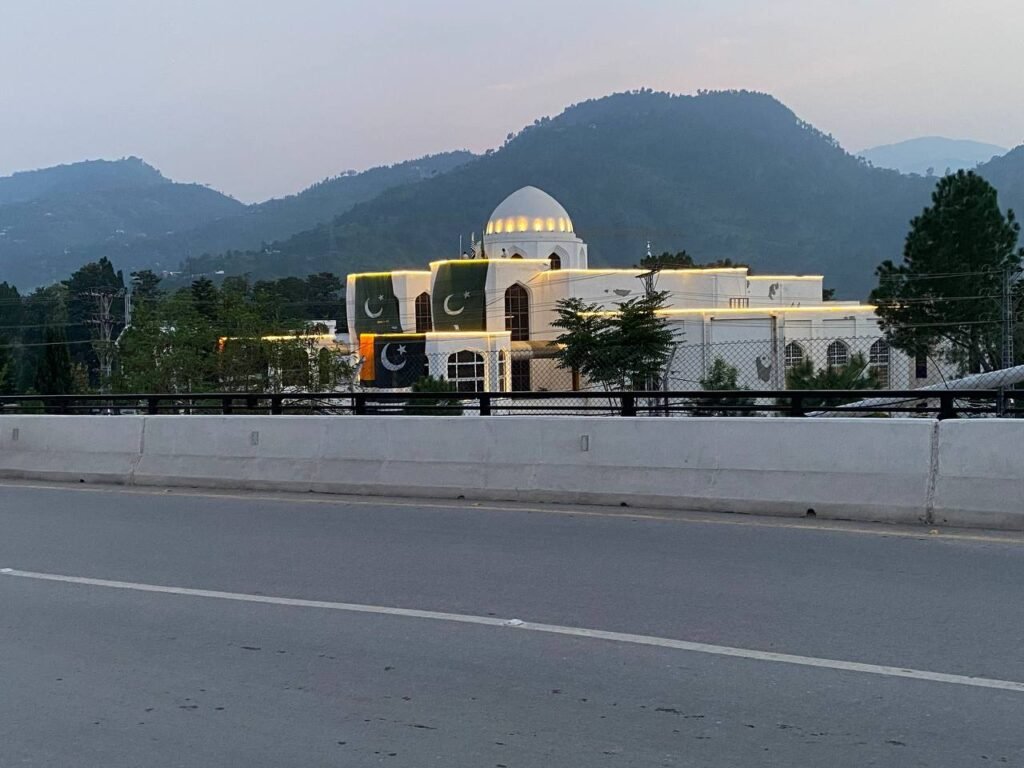
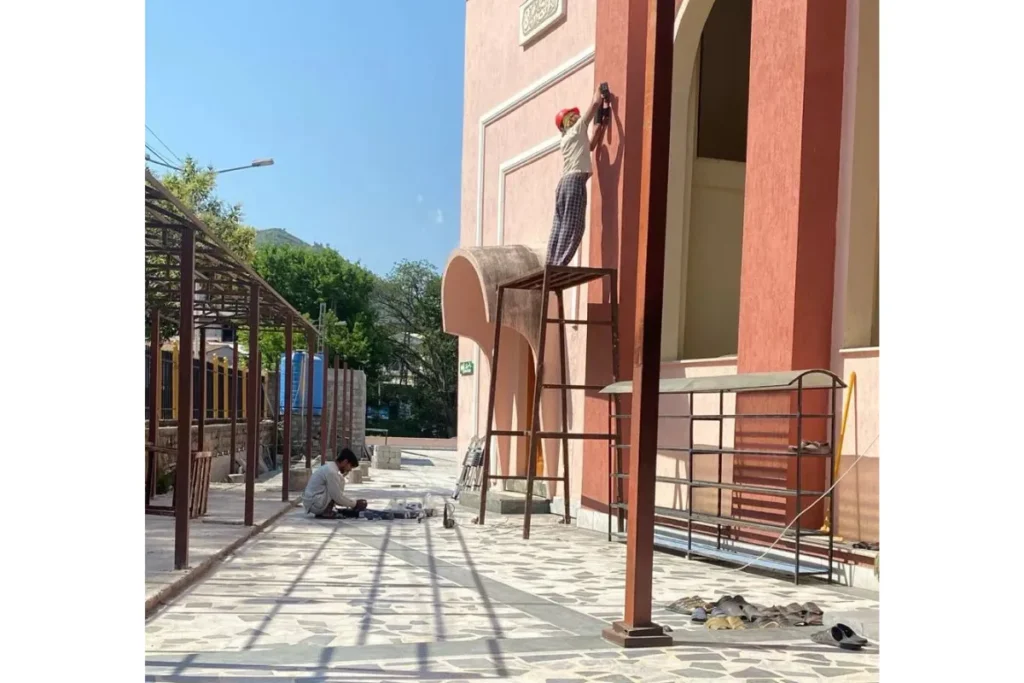
Newon Lighting had the pleasure to illuminate the Usmania Mosque (Jamia Ottoman Usmania) in Muzaffarabad, Azad Jammu and Kashmir — a Turkish-style mosque gifted to the region and standing in the city’s central square, directly facing the Prime Minister’s official residence. The brief was simple but significant: extend the mosque’s daytime grandeur into the night, turning Pakistan-administered Kashmir’s most recognisable Ottoman-inspired structure into a permanent symbol of the city skyline.
About Usmania Mosque
The three-storey Usmania Mosque sits at the heart of Muzaffarabad, the capital of Azad Jammu and Kashmir, and can accommodate roughly 2,500 worshippers. It was inaugurated in 2009 by Turkish President Recep Tayyip Erdoğan, then Turkey’s Prime Minister, who offered prayers inside after unveiling a commemorative plaque. The mosque forms part of a much larger gesture of solidarity: when Pakistan sought help to rehabilitate victims of the devastating 2005 earthquake, Turkey was the first nation to respond, going on to fund and design almost every major public building in the rebuilt city.
Today the mosque is one of the defining features of Muzaffarabad’s skyline — its pencil minarets and Ottoman domes giving the riverside capital, set at the confluence of the Jhelum and Neelum rivers, the unmistakable character of a small Turkish city in the Kashmir mountains.
The Lighting Brief
By day, Usmania Mosque’s Ottoman architecture — its central dome, four minarets, arcaded columns, and carved cornices — is the most photographed structure in Muzaffarabad. The challenge for Newon was to give the building the same visual authority after sunset: not a single floodlight wash, but a layered lighting scheme that follows the building’s actual architectural lines, the way classical Ottoman mosque design intends light and form to interact.
The Lighting Design — Zone by Zone
Cornices, Dome Edges & Arches — COB Aluminium Profile
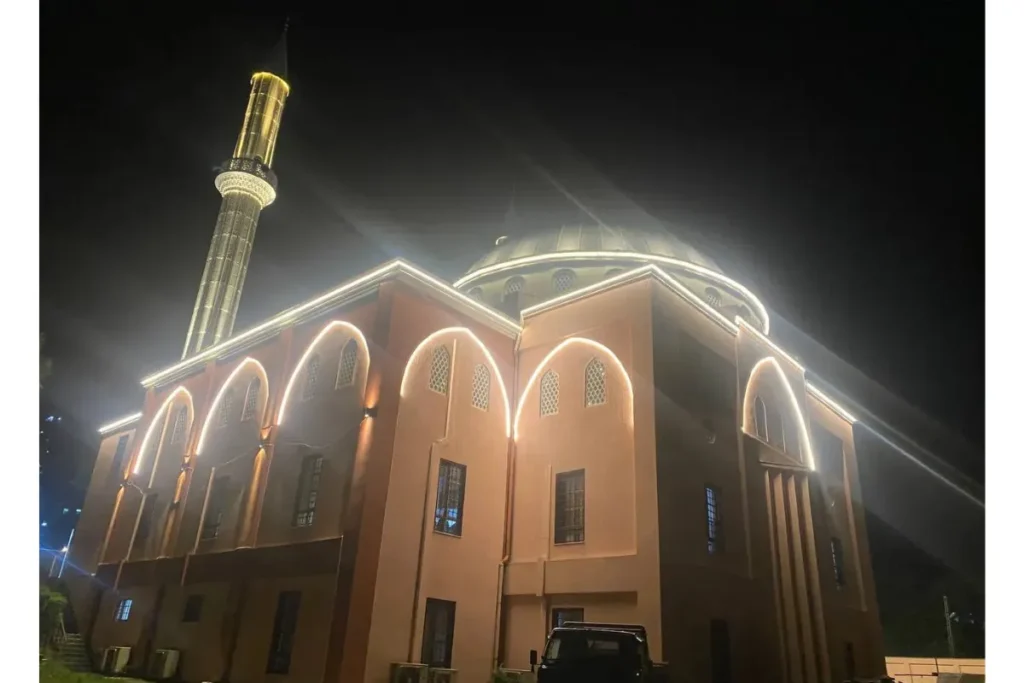
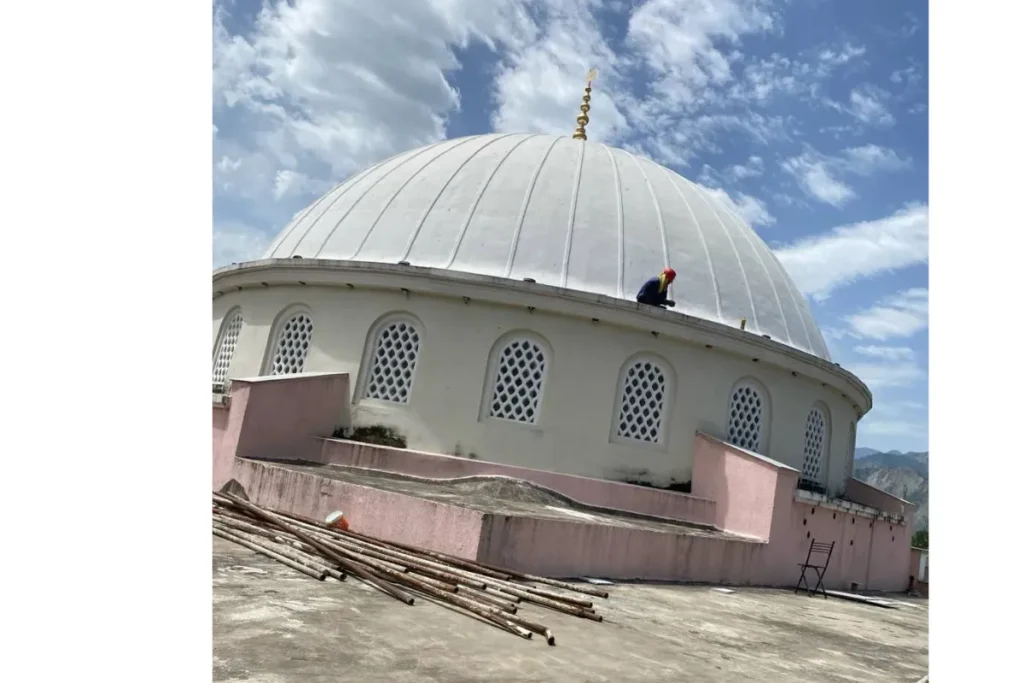
The lower edge of the dome, the surrounding cornices, and every decorative arch are traced with COB aluminium profile lighting behind an acrylic diffuser — 10W/m, fully waterproof, 3000K warm white. This is the technique that defines the building’s outline as a continuous line of light rather than a series of disconnected spots, giving the dome and arches the same crisp geometry at night that they have in daylight.
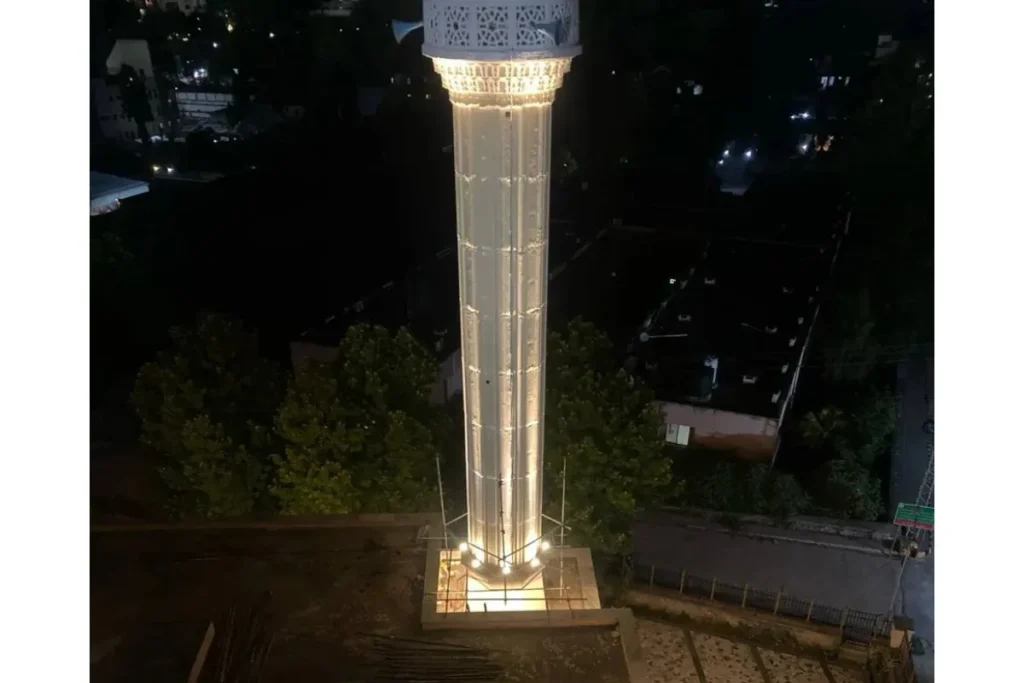
Minarets — Two-Point Beam & Spot
Each of the mosque’s minarets is lit in two layers: 12W spotlights at the crown highlight the finial and upper gallery, while 18W beam lights at the base project upward along the full shaft. This two-point method — light from below climbing to meet light from above — is what gives Usmania Mosque’s minarets their visible height and presence against the night sky, distinguishing the building from kilometres away across the Jhelum valley.
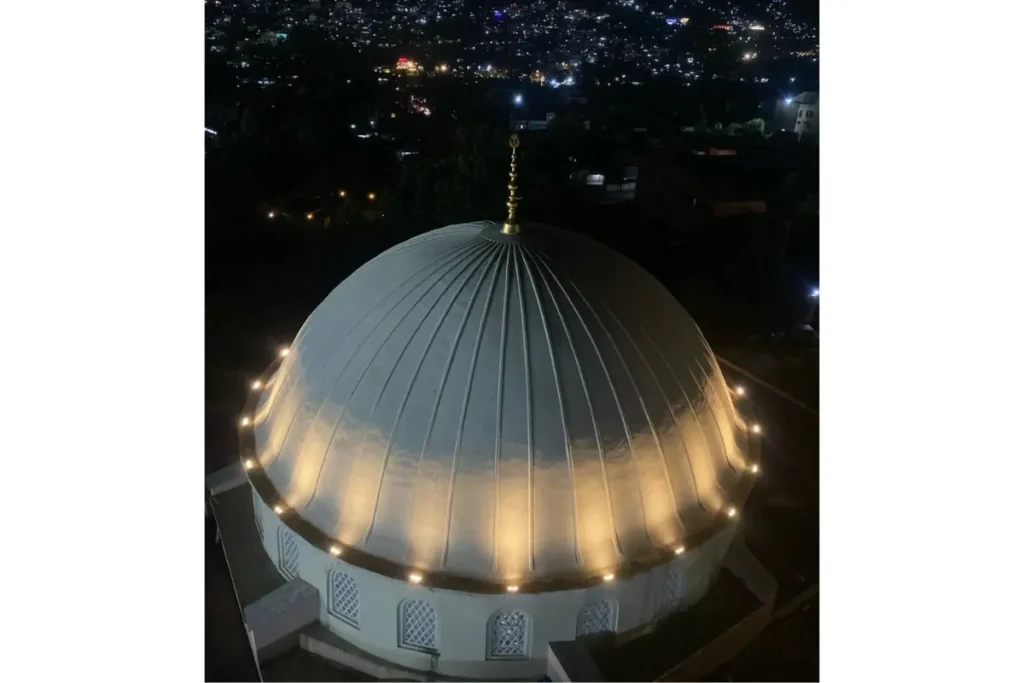
Main Dome — Ring Lighting
The dome itself is bathed from below using 12W ring lights, producing a soft, even wash across the curved surface rather than a harsh single-point glow. This is the classical approach to dome illumination found across Ottoman-influenced architecture worldwide — soft, ambient, never glaring.
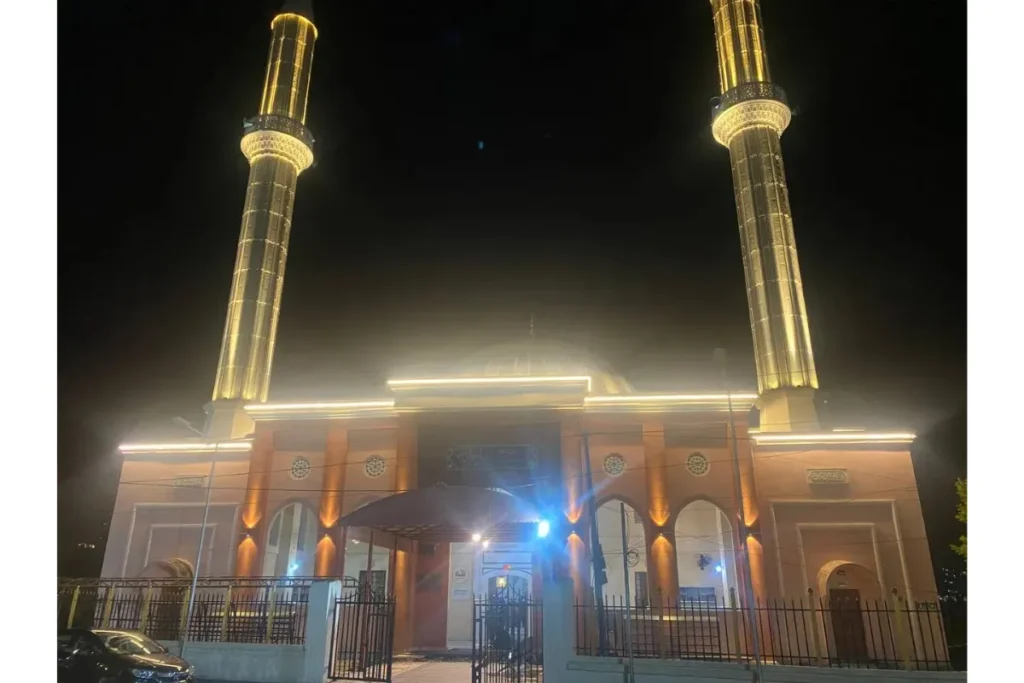
Columns & Walls — Up/Down Wall Lights
The mosque’s arcaded columns are illuminated with 18W up-and-down cylindrical wall lights, creating a rhythmic vertical pattern along the building’s façade that echoes the colonnade structure itself — a detail that reads clearly from the public square in front of the AJK Prime Minister’s residence.
All fixtures across every zone use a single, consistent 3000K warm white colour temperature — the correct specification for heritage and religious architecture, where a unified warm tone reads as respectful and timeless rather than commercial or theatrical.
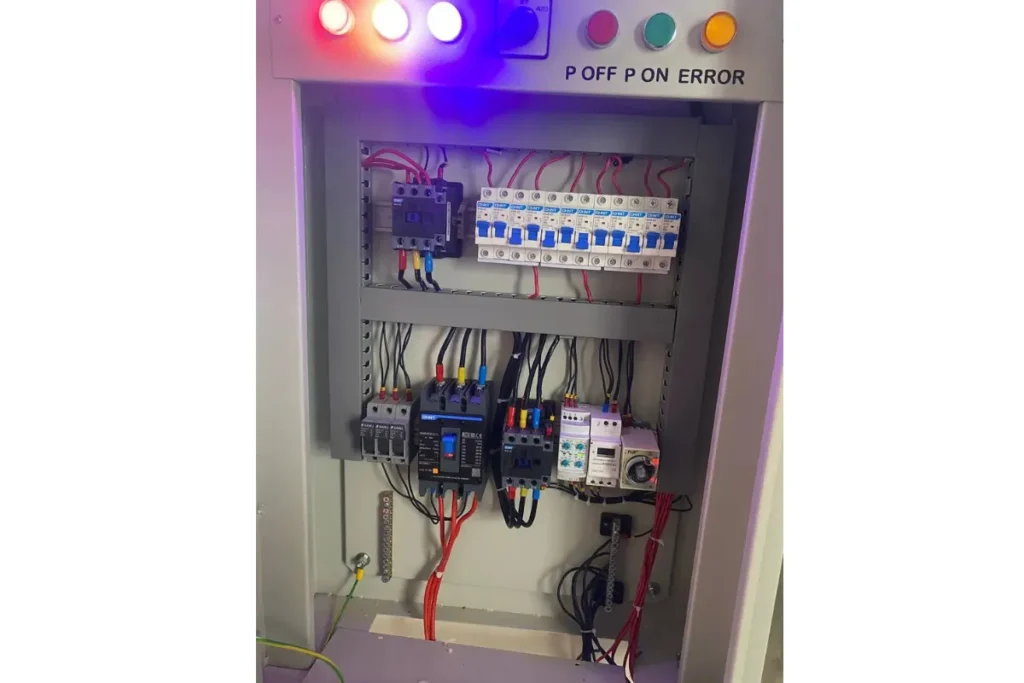
Engineering the Control System
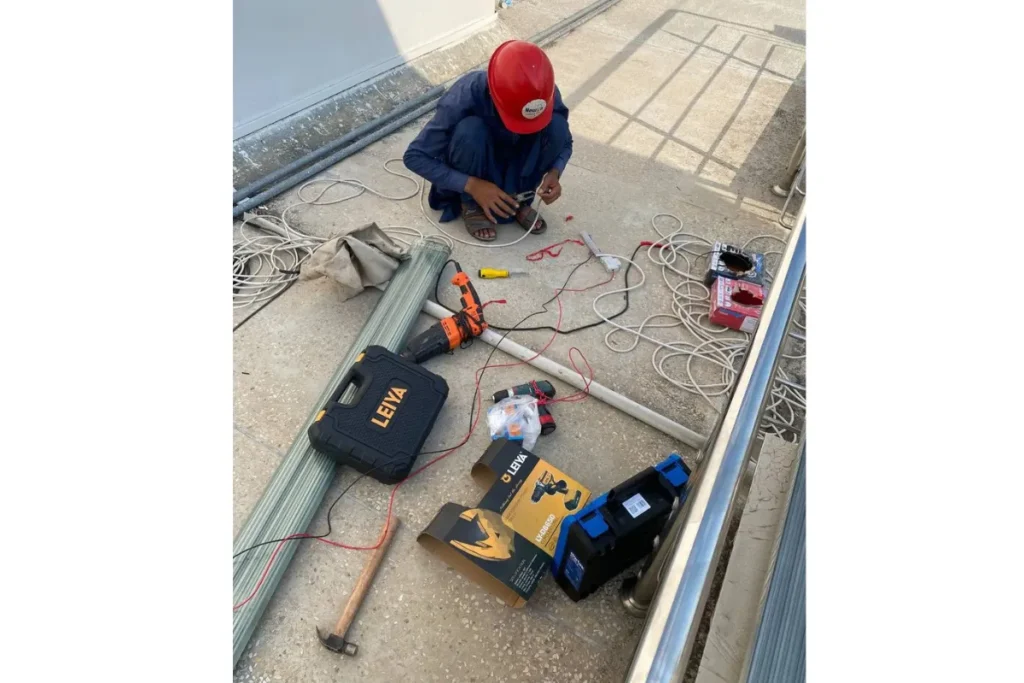
A facade lighting scheme this size — spanning dome, four minarets, full cornice line, and every column — needs power distribution that is both safe and serviceable for decades, not just for the opening night. Newon designed and installed a dedicated distribution board (DB) specifically for the mosque’s lighting load:
- 30A Triple-Pole MCCB — master protection and isolation for the entire lighting system
- 12 individual 16A MCBs (four per phase) — each protecting one lighting zone independently, so a single fault trips only that zone, never the whole building
- Dedicated neutral and earth blocks — common, code-compliant connection points for every circuit
- Colour-coded 3-phase supply — Red / Yellow / Blue phases, black neutral, green/yellow earth, so any electrician can identify and service the system instantly
The entire system runs on an automatic voltage-control timer: lights switch on at 7:00 PM and off at 1:00 AM, seven days a week, with no manual operation required — and the schedule can be reprogrammed on site as seasonal sunset times change.
Recognition
The project was carried out for the Government of Azad Jammu and Kashmir and was appreciated by the XEN Muzaffarabad, the Prime Minister of AJK, and the Commissioner of Muzaffarabad — recognition that reflects the standard expected of public and government heritage lighting work in Pakistan.
Why This Lighting Approach Works for Ottoman-Style Architecture
Classical Ottoman mosque design is built around a clear architectural hierarchy — a dominant central dome, supporting minarets framing the silhouette, and an arcaded base defining the building’s footprint. This cascade of dome, minaret, and colonnade is the same compositional logic found in the great Ottoman mosques of Istanbul and Edirne. Lighting that respects this hierarchy — rather than flattening it with a single floodlight wash — is what makes Usmania Mosque read as a coherent architectural statement after dark, not just an illuminated outline.
Newon’s Facade & Heritage Lighting Capability
The Usmania Mosque project sits alongside Newon’s other religious and heritage lighting work across Pakistan, including the DHA Phase 2 mosque facade illumination in Islamabad. Newon supplies and installs COB aluminium and silicone profile lighting, beam and spotlight systems, dome ring lighting, and custom distribution board engineering for mosques, government buildings, and heritage structures nationwide.
Frequently Asked Questions
What lighting technique was used to illuminate Usmania Mosque’s domes and arches?
The cornices, lower dome edges, and arches were illuminated using COB aluminium profile lights with acrylic diffusers, rated 10W/m and fully waterproof. This produces a continuous, even line of warm light along every architectural edge rather than isolated spotlights, defining the building’s silhouette after dark.
How were the minarets of Usmania Mosque lit?
Each minaret was lit in two layers: 12W spotlights at the top crown highlight the finial and upper gallery, while 18W beam lights at the base project upward along the full minaret shaft. This two-point technique creates depth and height emphasis on Muzaffarabad’s tallest illuminated structures.
What automation controls the Usmania Mosque lighting system?
A purpose-built distribution board with a 30A triple-pole MCCB and 12 individually protected 16A MCBs (four per phase) controls all lighting zones. A voltage-control timer switches the entire system on at 7:00 PM and off at 1:00 AM, seven days a week, fully automatically, with the schedule adjustable on site.
Why is each lighting zone on a separate circuit breaker?
Splitting the dome, minaret, column, and profile circuits across 12 individual MCBs means a fault in one zone trips only that breaker, leaving all other lighting groups fully operational. This is standard practice for large public buildings where uninterrupted illumination matters for safety and appearance.
Planning a Mosque or Heritage Facade Lighting Project?
Newon designs, supplies, and installs complete architectural facade lighting systems — from COB profile lines and dome ring lighting to fully engineered distribution boards with automated timer control — for mosques, government buildings, and heritage structures across Pakistan and Azad Jammu and Kashmir.
💬 WhatsApp: +92 343 9227883 📧 info@newon.pk | 📞 +92 343 9227883
📍 Office No 2, First Floor, Haroon Plaza, Islamabad
Facade Lighting Installation Service | LED Aluminium Profiles | DHA Phase 2 Mosque Project | Peshawar Museum Heritage Project | All Projects
Sources: Anadolu Agency, The Express Tribune