


- INDOOR LIGHTS
- 360 Degree Neon Customised Lighting
- Magnetic Track Lights
- Skyline Steel Strip Lighting
- Chandelier & Pendant
- Down Lights
- Bulbs
- Surface Mounted Lights
- Led Rope Light
- Led panels
- Cabinet & Wardrobe Lights
- Led Tube and Batten Lights
- Linear Hanging & Recessed Bar Lights
- Track Lights
- Wall Lights
- Fibre Optic Ceiling Lights
- Lamps
- OUTDOOR LIGHTS
- SOLAR LIGHTS
- Disco and Party Lighs
- Led Addressable Lights & Controllers
- Fibre Optic Lights
- Stretch Fabric Ceiling Light
- Silicone Profile Light
- Led Strip Lights
- Led Aluminium Profile
- Led Adapters & Power Supplies
- Customized Lights
- Led tree Lighting and Decoration
- OTHER PRODUCTS

Installation of flexible silicon in reception area at National aerospace simulation centre Rawalpindi

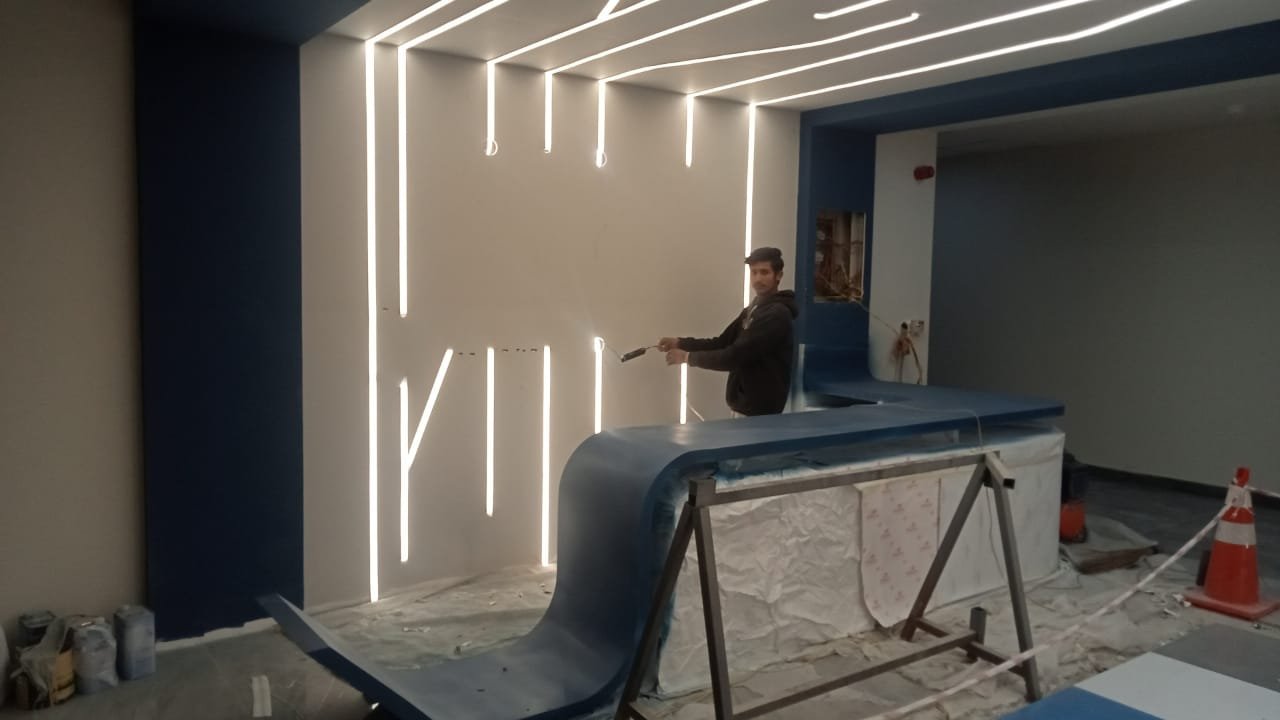
Flexible Silicone Profile Light Installation in Wooden Wall Grooves — Reception Area, National Aerospace Simulation Centre, Rawalpindi | Newon Pakistan
Newon Pakistan installed flexible silicone profile LED lighting into pre-routed wooden wall panel grooves at the reception area of the National Aerospace Simulation Centre in Rawalpindi — recommending and implementing a superior silicone profile solution where the client had originally planned to use rope light behind an acrylic sheet. The installation used a 30×20mm silicone profile body with a 15mm double LED strip in 24V natural white, with minor groove customisation to achieve a precise fit. The result is a reception wall that glows along clean architectural lines, projecting the technical precision and institutional gravity that an aerospace simulation facility demands.
Project Overview: Reception Lighting at a High-Security Aerospace Institution in Rawalpindi
The National Aerospace Simulation Centre in Rawalpindi is a high-specification government technical facility operating in Pakistan’s aerospace and defence sector. Its reception area is the first interior space encountered by officials, researchers, industry representatives, and visiting dignitaries — a space that must communicate the precision, seriousness, and technical excellence of the institution it represents from the moment a visitor walks through the door.
The client’s interior design team had already made an important architectural decision: routed grooves in the wooden wall panel cladding of the reception area, intended to be lit as linear light features. The original plan was to place rope light behind an acrylic sheet cover in these grooves — a technically straightforward but aesthetically limited solution.
Newon visited the site before any product was procured, assessed the actual groove dimensions and the spatial constraints behind the wall panels, and made a professional recommendation: use flexible silicone profile LED lighting instead. This recommendation was adopted immediately. The superior finish quality of silicone profile over rope light in a formal institutional reception — the smooth, hotspot-free light line versus the uneven dot pattern of rope light through acrylic — made the decision self-evident once a sample was shown.
This project exemplifies something Newon does consistently across its commercial and institutional portfolio: arrive at the site before making a specification decision, assess the actual conditions rather than assuming from drawings, and recommend the solution that will produce the best result rather than the easiest one to supply. The National Aerospace Simulation Centre joins a range of Rawalpindi-area projects in Newon’s portfolio, alongside the Fauji Foundation Girls College fibre optic installation and the Askari Institute of Technology in Rawat.
“The client came to us with a solution already in mind. Our job was to look at the site honestly and tell them whether that solution was the best one available for their space — and in this case it wasn’t. Silicone profile in the groove gave a result that the rope-behind-acrylic approach simply could not match. That recommendation, and the client’s trust in acting on it, is what made this project special.”— Newon Lighting Pakistan
Why Silicone Profile Beat Rope Light Behind Acrylic: The Technical Case
The client’s original plan — rope light recessed into the groove behind a frosted acrylic cover — is a commonly used solution for groove lighting in Pakistan and represents a reasonable budget choice for many residential and low-specification commercial applications. But for the reception area of a precision government aerospace facility, it had three significant limitations that silicone profile directly resolves.
Light Quality: Hotspot-Free vs Visible LED Dots
Standard rope light contains individual LED emitters spaced at regular intervals inside a round PVC tube. Even through a frosted acrylic cover, the individual LED positions remain partially visible — particularly in a formal environment where a visitor is standing close to the wall and looking at it from a near-perpendicular angle. The result is a light line that reads as a series of bright dots with dimmer intervals between them, rather than a continuous, seamless glow.
Flexible silicone profile eliminates this entirely. The silicone body is engineered to diffuse the LED strip output uniformly across its full face — the silicon material scatters light in all directions within the profile cross-section before it exits, producing a perfectly smooth light line with zero visible LED positions at any viewing angle. For an institution of the National Aerospace Simulation Centre’s standing, where the reception communicates technical precision to every visitor, the difference between a dot-pattern rope light finish and a seamless silicone profile finish is not a minor aesthetic preference — it is the difference between a professional installation and an incomplete one.
The Acrylic Cover: Added Complexity Without Added Quality
The rope-behind-acrylic approach requires two separate materials to achieve what silicone profile achieves with one. The acrylic cover must be sourced, cut to size, and secured within the groove — adding cost, installation time, and a potential fail point if the cover becomes discoloured, scratched, or dislodged over time. The silicone profile body serves as its own diffuser and its own protective housing simultaneously — it is installed directly into the groove without any secondary cover required. Fewer components means fewer failure modes and a cleaner, more robust installation.
Durability in a High-Traffic Institutional Environment
Silicone is significantly more durable than PVC rope light under the thermal cycling that occurs in an enclosed wall groove over years of daily on/off operation. PVC degrades under repeated heat-cool cycles, becoming brittle and discoloured over time — particularly in Pakistan’s climate, where ambient temperatures in an enclosed wall cavity can reach 40°C+ during summer months. Silicone retains its flexibility, colour stability, and mechanical integrity across a far wider operating temperature range. For the National Aerospace Simulation Centre, whose reception wall is expected to look identical in five or ten years as it does today, the long-term durability of silicone profile is a meaningful specification advantage over PVC rope light.
This specification philosophy — choosing the product that produces the best long-term result rather than the lowest short-term cost — is consistent with Newon’s approach across all institutional and commercial projects. The same silicone profile technology was used in Newon’s nationwide PSO VIBE store rollout and in the contemporary house facade in City Housing Sialkot — both projects where specification quality determined the visual outcome.
Installation Detail: 30×20mm Profile, 15mm Double LED Strip, 24V Natural White
The technical decisions made for this installation — profile size, LED strip specification, voltage, and colour temperature — were each determined by the specific conditions at the National Aerospace Simulation Centre site. Here is the reasoning behind each choice.
Profile Specification: 30×20mm Silicone Body
The 30×20mm silicone profile was selected to match the groove dimensions routed into the wooden wall panels. The 30mm width provides a substantial light face — wide enough to produce a visually confident light line that is easily readable across the reception space, but not so wide as to overpower the groove detail. The 20mm depth accommodates the LED strip and allows sufficient internal volume for the silicone body to diffuse the LED output effectively before it exits the front face.
At site, Newon found the groove dimensions were slightly larger than the 30×20mm profile. Rather than substituting a different product or leaving a visible gap, the team made minor customisations to the groove — adjusting the backing and reveal — to achieve a precise, flush fit for the profile. This site-level problem-solving is part of what makes Newon’s installation service different from a simple supply-and-drop arrangement: the team takes ownership of the result, not just the product delivery.

LED Strip: 15mm Double Strip in 24V
The 15mm double LED strip was specified for two reasons. First, width: 15mm sits comfortably within the 30mm profile face, leaving the silicone body to diffuse the output evenly without the strip edges being visible through the sides. A narrower single strip would produce a brighter central zone with darker margins — a hotspot pattern that the double strip eliminates by distributing LEDs uniformly across the full substrate width.
Second, output: the double-row construction places two parallel LED rows on the same substrate, roughly doubling the lumen output per metre compared to a single-row strip of the same width. In a reception area where the groove lighting must compete visually with the general ambient illumination of the space, higher lumen output ensures the feature reads as a confident architectural element rather than a barely noticeable detail.
The 24V DC supply voltage — paired with a compatible LED driver and power supply — was chosen specifically because the confined space behind the wooden panels limited cable routing options. At 24V, current draw for the same wattage of LED strip is halved compared to 12V, allowing smaller cable cross-sections in tight routing paths and reducing voltage drop across the full groove run — ensuring consistent brightness and colour temperature from the first centimetre of the groove to the last.
Colour Temperature: Natural White 4000K
Natural white — 4000K CCT — was specified for the reception groove lighting. As discussed in the Datamatics Technologies office lighting project and the HBL Zarai Services corporate project, 4000K natural white is the correct CCT for formal professional and institutional environments. It is neither warm enough to read as domestic nor cold enough to read as clinical — it projects clarity, professionalism, and technical precision. For an aerospace simulation centre reception, these are exactly the associations the lighting should create.

Wiring in a Confined Space: The Challenge Overcome
The space behind the wooden wall panels at the National Aerospace Simulation Centre was very limited — far less accessible than a conventional false ceiling cavity or open wall void. Routing the power supply cable to the LED strip connections, positioning the driver, and making all connections cleanly within this constrained space required careful sequencing: cables first, profile second, testing third, with no opportunity to retrofit a missed connection once the profile was in place.
The 24V specification reduced the physical cable cross-section needed for the load — an important factor when routing in tight spaces where a heavy 12V cable would have been significantly harder to manoeuvre. All connections were made with low-profile connectors and the wiring was secured discreetly within the panel void before the silicone profiles were fitted. The finished reception has no visible wiring at any point — a result that requires disciplined installation practice, not just good products.
Technical Specifications: Silicone Profile Installation — National Aerospace Simulation Centre
“Reception area feature lighting — government aerospace facility”
| Parameter | Specification |
|---|---|
| Product Type | Flexible Silicone Profile LED Light — groove-mounted |
| Profile Dimensions | 30mm width × 20mm depth (30×20mm cross-section) |
| Profile Material | Flexible food-grade silicone — self-diffusing, heat-resistant |
| LED Strip Type | 15mm double LED strip (dual-row high-density) |
| Input Voltage | 24V DC |
| Colour Temperature (CCT) | Natural white — 4000K |
| Colour Rendering Index (CRI) | ≥ 80 Ra (natural white commercial standard) |
| Mounting Method | Recessed into pre-routed wooden wall panel grooves |
| Groove Substrate | Wooden wall panel / MDF sheet cladding |
| Groove Customisation | Minor adjustment to groove backing to achieve flush profile fit |
| Secondary Cover | None required — silicone body is self-diffusing |
| Wiring Configuration | 24V constant voltage — driver located in accessible panel void |
| Power Supply | Compatible 24V LED driver — surge-protected |
| LED Lifespan | 50,000+ hours (L70) |
| Operating Temperature | –20°C to +60°C — suitable for Pakistan’s summer wall cavity temperatures |
| Application |
Silicone Profile LED Lighting: Why It Is Pakistan’s Most Versatile Architectural Light Product
The National Aerospace Simulation Centre installation illustrates a broader truth about silicone profile lighting: it is the most adaptable architectural LED product available, capable of being fitted into almost any groove, channel, reveal, or recess that a designer or client creates. Understanding the full range of its applications helps architects, designers, and homeowners appreciate why it has become the default specification for groove and detail lighting across premium commercial and residential projects in Pakistan.
Flexibility: The Defining Physical Advantage
Rigid aluminium profile lighting — the most commonly specified alternative for groove applications — is excellent for straight runs but cannot bend around corners, curves, or irregular groove paths without specialist mitre cutting and joining. Flexible silicone profile bends smoothly in any direction, allowing a continuous light run around corners, along curved walls, and through non-rectilinear architectural details without joints or interruptions in the light line. This flexibility makes it the only practical solution for grooved designs that include curved elements — increasingly common in contemporary Pakistani interior design for premium residential and commercial spaces.
Self-Diffusing: No Secondary Diffuser Required
The silicone material’s inherent translucency diffuses the LED output within the profile body before it exits the face — producing a smooth, hotspot-free light line without any additional diffuser component. This eliminates the acrylic cover, frosted glass panel, or separate diffuser insert that rigid aluminium profiles require to achieve the same visual quality. Fewer components means simpler installation, lower cost, and a more robust long-term result.
Available Profiles: Newon’s Range for Pakistani Projects
Newon stocks and supplies silicone profiles in a range of cross-sections for different groove and application types. The 30×20mm profile used at the National Aerospace Simulation Centre is well-suited for standard wall groove applications. For narrower grooves, 10×20mm and 16×16mm profiles are available. For outdoor and IP-rated applications, silicone profile’s inherent weather resistance makes it suitable for exterior groove lighting without additional housing. For applications requiring a round or tubular profile (neon-flex effect), 360-degree cylindrical silicone profiles are available. Explore the full range at Newon’s silicone profile product category.
Technical Standards Relevant to Groove LED Lighting in Institutional Environments
While silicone profile groove lighting in a reception wall may appear a relatively modest installation compared to large-scale facade or entertainment lighting projects, it is governed by the same international electrical and photometric standards that apply across all commercial LED installations in Pakistan.
IEC 60598 — Safety of Luminaires
The IEC 60598 standard (Safety of Luminaires) governs the construction and testing requirements for all luminaires — including LED strip lighting systems used in architectural groove applications. Compliance with IEC 60598 requires that luminaires be thermally safe under normal operating conditions, that drivers and power supplies meet the relevant isolation and surge protection requirements, and that the system be designed to prevent contact with live parts. Newon’s 24V DC LED system with surge-protected driver is designed in accordance with these requirements, important in a government facility environment where electrical safety standards are taken seriously.
EN 12464-1 — Lighting of Work Places (Indoor)
The EN 12464-1 European standard for indoor workplace lighting — widely referenced in Pakistan’s commercial and government construction sector — specifies maintained illuminance, uniformity, and glare control requirements for reception areas: a minimum of 300 lux maintained average, with UGR ≤ 22 for visual comfort. The groove feature lighting at the National Aerospace Simulation Centre supplements the general ambient lighting of the reception to contribute to this illuminance target while also providing the architectural feature character that distinguishes a designed reception from a functional one.
ASTM D3029 and Silicone Material Standards
Food-grade silicone used in architectural LED profiles is manufactured to material standards including ASTM and ISO requirements for silicone elastomers — confirming thermal stability across the –20°C to +60°C operating range, UV resistance, and chemical inertness to cleaning products and humidity. These material properties underpin the long-term durability argument for silicone over PVC rope light in institutional environments.
For Architects and Interior Designers: Specifying Silicone Profile for Groove and Reveal Lighting in Pakistan
Groove and reveal lighting in wooden wall panels, gypsum ceilings, and architectural joinery is one of the most consistently requested effects in contemporary Pakistani commercial and premium residential interiors. The National Aerospace Simulation Centre project illustrates both the best practice for specifying this effect and the most common mistake to avoid.
Specify the Profile Before the Groove Is Cut
The single most common source of problems in groove lighting projects is that the groove is designed and cut before the LED product is confirmed — and the groove dimensions do not match the available product. At the National Aerospace Simulation Centre, the client had already routed the grooves before approaching Newon, creating a slight size mismatch that required adaptation. This is solvable, as Newon demonstrated — but it adds cost and time that could be eliminated by confirming the product specification before any routing or cutting work begins. The correct workflow is: select the silicone profile size → design the groove to match — not the reverse.
Groove Depth Must Accommodate Driver Access
A frequently overlooked design detail is the driver location. A silicone profile requires a 24V (or 12V) constant-voltage LED driver installed somewhere in the circuit — and that driver must be accessible for maintenance or replacement during the building’s operational life. In a wall panel application, the driver is typically located within the wall void behind the panels, accessed through a discreet cover panel. This access panel must be incorporated into the joinery design at the detail drawing stage. If it is not, the driver becomes permanently inaccessible — a serious maintenance problem in a building expected to operate for decades.
Double Strip vs Single Strip: Always Specify for the Viewing Context
Whether to specify single-row or double-row LED strip within a profile should be determined by the ambient lighting conditions of the space. In a brightly lit reception or corridor, single-row strip may be insufficient to register visually against the general illumination — particularly for daylight-hours operation when natural light competes with the groove feature. Double strip, as used at the National Aerospace Simulation Centre, ensures the groove feature is consistently visible and impactful regardless of ambient light levels. For residential applications at night or in dimmer spaces, single strip is often adequate and lower-cost — but institutional and commercial daytime environments almost always benefit from double strip.
Newon can provide sample lengths and site-specific lumen calculations for groove lighting projects in Islamabad and Rawalpindi. Contact us for a consultation before your groove or reveal detail is finalised.
For Homeowners: Groove and Profile Lighting in Residential Interiors
The groove lighting technique Newon used at the National Aerospace Simulation Centre is directly applicable to residential interiors across Pakistan — and it is one of the most impactful and cost-effective architectural lighting upgrades available for new builds and renovations in Islamabad, Rawalpindi, and other cities.
Where Groove Lighting Works in Homes
In contemporary Pakistani residential design, groove lighting is most commonly requested in: TV wall units and entertainment alcoves, where a glowing reveal behind the screen adds visual depth; wardrobe and dressing room interiors, where cabinet and wardrobe lighting from Newon’s range adds a premium quality cue; false ceiling coves, where the groove is cut into the gypsum reveal; staircase walls and handrail details, where groove lighting dramatically elevates the staircase at night; and feature wall panels in drawing rooms and formal lounges, where the same wooden cladding-with-lit-grooves approach used at the National Aerospace Simulation Centre creates a sophisticated, designed quality.
Warm White vs Natural White for Home Grooves
For residential groove lighting, warm white (3000K) is generally the preferred CCT — it creates a cosy, inviting atmosphere appropriate for living spaces and bedrooms. Natural white (4000K), as used at the aerospace centre, is better suited to formal and task-oriented spaces. Cool white (6500K) is appropriate only for kitchen work zones and study rooms where maximum visual clarity is the priority. Newon supplies silicone profiles in all three CCT options — contact us to discuss the right specification for your specific room and design intent.
Watch the Installation: National Aerospace Simulation Centre Reception — Newon
Newon documented the completed silicone profile groove lighting at the National Aerospace Simulation Centre in a short video, showing the finished result from multiple angles. The video demonstrates the seamless, hotspot-free quality of the silicone profile output in the wooden wall grooves far more vividly than photographs alone.
For more Newon project videos, visit the Newon Pakistan YouTube channel.
Related Silicone Profile, Groove Lighting, and Institutional Projects by Newon Pakistan
- Silicone Profile Lighting — PSO VIBE Convenience Stores, Pakistan — Nationwide retail rollout using the same silicone profile technology — demonstrating the product’s scalability from a single reception wall to multi-site commercial deployment.
- Contemporary House Facade Lighting — City Housing, Sialkot — Silicone profile as an architectural facade feature on a premium residential exterior.
- Linear Bar Lighting — British American Tobacco Head Office, EOBI Building, Islamabad — Premium architectural linear LED lighting for one of Pakistan’s most prominent corporate headquarters — a comparable institutional-grade lighting specification to the aerospace centre.
- Corporate Office Lighting — HBL Zarai Services, AJ Towers, Gulberg Islamabad — Complete corporate office lighting for a major financial institution — demonstrating Newon’s range across both profile lighting and full commercial lighting packages.
- Complete Lighting Installation — Askari Institute of Technology, Rawat — Comprehensive five-zone institutional lighting project in a nearby Rawalpindi-corridor location.
- Fibre Optic Curtain — Fauji Foundation Girls College, Rawalpindi — Another Rawalpindi area project — specialist therapeutic lighting for a Fauji welfare institution.
- Office Lighting Upgrade — Datamatics Technologies, Gulberg Islamabad — COB spotlight and multi-format pendant upgrade in a technology company office — sharing the natural white 4000K CCT specification used at the aerospace centre.
- Car Detailing Studio Lighting — Auto Extreme, I-9 Islamabad — Another project featuring linear profile wall lighting in a zig-zag pattern — the same product category applied in a different architectural context.
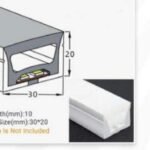 30mm is the width and 20mm is the depth of profile.
Led strip used inside was 15mm double led 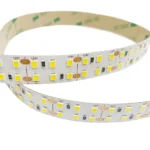 strip in 24V natural white color.
There were some difficulties in wiring as the space behind the wooden sheets was too small but all went smoothly and it looks good after the installation.
For video checkout the link below;
https://youtube.com/shorts/yZdk-qogLYo?si=uulao3E__ieQ-SLF
Frequently Asked Questions — Flexible Silicone Profile and Groove Lighting Pakistan
What is a flexible silicone profile light and how is it different from rope light?
Silicone profile light encases an LED strip inside a moulded silicone extrusion that acts as both diffuser and housing — producing a seamless, hotspot-free light line with no visible individual LED positions. Rope light uses a round PVC tube that shows distinct LED dots through any frosted cover. For institutional or commercial applications where the groove lighting is a permanent, prominently visible feature, silicone profile’s superior finish quality is not optional — it is the specification that produces a professional result. Rope-behind-acrylic cannot match it.
What size silicone profile was used at the National Aerospace Simulation Centre?
A 30mm wide × 20mm deep (30×20mm) silicone profile body, housing a 15mm double LED strip. The groove in the wooden wall panels was slightly larger than this profile — Newon made minor adjustments to the groove backing to achieve a precise flush fit. Newon supplies silicone profiles in multiple cross-section sizes for different groove dimensions — contact us with your groove measurements for the correct product recommendation.
Why is 24V DC preferred over 12V DC for groove LED applications?
24V DC halves the current draw compared to 12V at the same wattage, reducing voltage drop over long runs and allowing smaller cable cross-sections in tight routing spaces. At the National Aerospace Simulation Centre, where cable routing space behind the wall panels was very limited, 24V was essential for achieving consistent brightness across the full groove length without visible dimming toward the far end of the run. For groove runs exceeding 5 metres, 24V should always be specified over 12V.
Why is 4000K natural white the best CCT for a reception area in a government or institutional building?
4000K natural white sits between warm white (too domestic) and cool daylight (too clinical) — producing a professional, clear, and neutral light that complements formal institutional interiors. It renders the typical grey, navy, and neutral tones of military and government interiors accurately, and communicates precision and competence without the harsh coldness of 6500K. For residential applications, 3000K warm white is more appropriate — but for institutional reception areas, 4000K is the correct professional specification.
Can silicone profile lights be installed in wooden wall grooves?
Yes — this is one of the best applications of silicone profile. The flexible body conforms to the groove profile and fits without requiring a secondary acrylic cover. Where grooves are slightly oversized, minor adjustment of the backing achieves a flush, secure fit. The result is a wall that glows along precise architectural lines — an effect that looks designed and intentional from any viewing angle. Newon installs groove silicone profile lighting across residential and commercial projects in Islamabad and Rawalpindi.
How do you hide the wiring in a groove LED installation?
Route all power cables through the wall void or ceiling cavity before fitting the profile — confirming all cable runs clear the groove positions cleanly. Use low-profile connectors at all junction points. Locate the LED driver in an accessible position within the panel void, incorporated into the joinery design as a discreet access panel. At 24V, smaller cable cross-sections allow more flexible routing in tight spaces. Plan and complete all wiring before the profile is installed — retrofitting missed connections after profile installation is difficult and risks damaging the groove detail.
Can Newon supply and install silicone profile groove lighting across Pakistan?
Yes. Newon supplies silicone profile in multiple sizes and CCTs from stock, and installs in Islamabad, Rawalpindi, and surrounding areas with site visits within 24–48 hours. For other cities, supply-only with technical installation guidance is available. Contact Newon at info@newon.pk or WhatsApp +92 343 9227883.
About Newon — Architectural LED Lighting Specialists for Pakistan’s Most Demanding Projects
Newon is Pakistan’s specialist in architectural LED lighting — including silicone profile, aluminium profile, LED strip, and custom fabricated fixtures — with 8+ years of project experience across institutional, commercial, hospitality, and residential sectors. Our institutional portfolio spans the National Aerospace Simulation Centre, Fauji Foundation Girls College, Askari Institute of Technology, the World Bank Building, and government heritage illumination for the KP Government — confirming the trust that Pakistan’s most demanding clients place in Newon’s specification knowledge and installation quality.
We do not just supply products — we visit sites, assess actual conditions, and recommend the solution that will produce the best result for the specific project. That is what happened at the National Aerospace Simulation Centre, and it is what happens on every project Newon undertakes. We also serve the UAE and GCC market through newon.ae.
Contact Newon
📧 info@newon.pk
📞 +92 343 9227883
💬 WhatsApp: +92 343 9227883
📍 Office No 2, First Floor, Haroon Plaza, Islamabad, Pakistan
Explore relevant products:
Silicone Profile Lights | LED Aluminium Profile | LED Strip Lights | Cabinet & Wardrobe Lights | LED Drivers & Power Supplies | LED Rope Lights
Installation services:
Indoor Lighting Installation | Linear Profile Installation | Facade Lighting Installation
There is obviously a bunch to know about this. I think you made certain good points in features also.
Magnificent website. Plenty of helpful information here. I am sending it to a few friends ans also sharing in delicious. And certainly, thank you on your sweat!